Tuesday, May 8, 2012

You cannot spell “inspire” without “ire”.


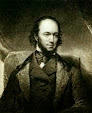
It will not be readily believed by anyone acquainted with the name Rufus Griswold (and the slurs and slanders that frequently preface or append it) that I have been honored with the Very Inspiring Blogger award, the title of which justifies an expectation on the part of its recipient that he, in the first place, inspires, and in the second actively maintains a blog.  I will let those who have found their way to these pages judge for themselves what inspiration may be found within, and will have to hope that having two very occasional blogs is as good as having one blog humming with activity.  This distinction has been bestowed upon me by the generous and tolerant Undine, author of the indispensable World of Poe blog and, as devotees of Edgar Allan Poe are concerned, one of the good ones.  Her deftly told and illuminating writings chronicling the life and shattering the myths of the wretch Poe’s troubled existence never fail to fill me with a strange, sometimes bitter nostalgia that I cherish.

 Accepting the award obliges me to divulge seven indiscriminate facts about myself, as well as to recognize the efforts of seven other bloggers.  I’ll not pretend that I am reluctant to share morsels of Griswoldia with you people; neither will I conceal the truth that I do not actually regularly frequent a great many blogs (I would certainly confer the award unto Undine had she not before now been so acknowledged, but as she nominated me I would be reluctant to do so lest the whiff of puffery pervade the blogosphere).  I am certain, however, that I can come up with some other bloggers of note if I search the misty recesses of my memory adequately.  There is one thing, however, that will likely render somewhat abortive any nominations I choose to make; the fact that fewer people read my blogs than were in attendance at Poe’s funeral.

I begin with the blogs of my choosing, in no order whatsoever...


ONE
Rob Velella is the blogger responsible for both The Poe Calendar blog and The American Literary blog.  The former, detailing episodes in the life of the vile Edgar Allan Poe, is far better than its subject deserves.
http://poecalendar.blogspot.com/

TWO
Lovers of classic old time radio shows will enjoy the Times Past Old Time Radio blog, with a seemingly endless supply of shows in the public domain available for download.
http://otrarchive.blogspot.com/

THREE
Do you want information?  Fans of “The Prisoner” will no doubt learn much from Moor Larkin who runs the Number Six Was Innocent blog, freeing Patrick McGoohan’s television masterpiece from the cult-myths that have been spawned by fans over the years.
http://numbersixwasinnocent.blogspot.com/

FOUR
Only for the articles (wink wink), I present the BiblioBabes, which combines two of my favorite things...And books!
http://www.bibliobabes.ca/

FIVE
For a plethora of genuine correspondence on just about any topic you seek check out Letters of Note, maintained by Shaun Usher.
 http://www.lettersofnote.com/

SIX
While this is not strictly a blog, it is amazing and hilarious.  Real Garfield strips with the eponymous feline lovingly removed from each panel to reveal Jon Arbuckle’s descent into madness one day at a time.
http://garfieldminusgarfield.net/

That is all I have.

And now, with no further delay, here are seven miscellaneous details about myself…


 ONE
“Mayonnaise: One of the sauces which serve the French in place of a state religion.” – Ambrose Bierce, Cynic

I find mayonnaise to be the most detestable food stuff ever to be invented by man.  It is the Edgar Allan Poe of condiments as far as I am concerned.  To so much as open a jar of that vile substance in the same room where you are preparing a sandwich that I am meant to eat is to announce that our relationship is at an end.  If you were to spit in my lunch you would not witness a more horrified reaction from me than if even a single gob of mayonnaise were to come into contact with it.  I attribute two different reasons for my hatred of the white poison: First and foremost, it is offensive to every one of the five senses (yes, it even sounds disgusting).  The second reason is perhaps the result of my youthful gullibility.  When I was seven my brother Randolph, nine years my senior, told me of a predawn encounter he had had with the ‘mayonnaise man’ when he was a child.  He described a malformed figure in stained and tattered apparel descending from a horse-drawn cart that carried a number of empty jars, one of which the grunting figure removed from the cart and carried nearer the front door of our childhood home.  Once there he opened his rags to reveal the festering sores that overlay him like a second garment, weeping with purulence, and removed the lid from the jar.  He then began slowly, deliberately kneading his wounds, beginning at the forehead and working systematically downward, to harvest the white translucent fluid.  Twenty minutes passed as Randolph watched in revulsion until the jar was more or less filled to capacity and its lid replaced to seal in the goodness. 

 TWO
“I may say I know [Dr. Griswold's] general character for veracity; and have known it since 1848; it is very bad…his boasts of ladies’ favor and correspondence…” - Elizabeth F. Ellet, Cunt

“How the women have affected your condition it irks me to know.  They handle all of us hardly enough, but God! when they get hold of a chap of your poetic temperament they use him up completely—at least for a while.”- Charles Fenno Hoffman, Madman

By the time I died in 1857 I had amassed a library of 3280 items and had read every American poem published prior to 1850.  One would think that poetry was my obsession, but it was a means to an end.  A rear end.  A great many of them.  I had more hot women than irredeemable dissipate Edgar Allan Poe had hot meals.  From barely legal beauties to brainy bookish bluestockings my familiarity with the poetry of our land and my influence within literary circles and publishing houses, to say nothing of my natural charm and charisma, made both my social and professional life abound with the amorous attentions of lusty literary ladies.  Nothing moistens the underthings of a young poetess like the prospect of publication, and though their poetry be long forgotten, their cries of ecstasy will echo always in my memory.  I have been queried as to precisely how many woman I have taken to bed, but a gentleman does not satisfy such puerile and tactless curiosity; though I will say that a quick look at the table of contents of my volume of vulvic verse, “The Female Poets of America”, would provide one with a very conservative estimate.  Alas, these days my romantic exploits are limited to abusing Mr. Longfellow or, in polite company, making the beast with one back.

THREE
"And now for something completely different."
 "Comedy always works best when it is mean-spirited." - John Cleese, Tall Person

The rise and progress of the British television comedy form one of the most delightful and instructive chapters in the history of the medium. I am a huge devotee and have amassed quite an impressive DVD collection comprised of programs from the early 1960’s through the present.  My particular favorites include Steptoe & Son, Monty Python’s Flying Circus, Fawlty Towers, The Young Ones, Blackadder, Absolutely Fabulous, Red Dwarf, The Office, Peep Show, Gavin & Stacey, Hyperdrive and Saxondale.

 FOUR
“But here any foreigner’s literary property is every body’s, and the evil is not utterly unmixed; for it has enabled Mr. Griswold to compile a very acceptable volume of [Thomas Haynes] Bayly’s Poems.” – The N.Y. Tribune

"He takes advantage of a state of things which he declares to be 'immoral, unjust and wicked,' and even while haranguing the loudest, is purloining the fastest." - Joel T. Headley, Ass

People have referred to me as a ‘literary pirate’, a term I do not care for.  Captain Flint was a literary pirate.  I merely engaged in the printing of previously published, usually foreign works in my capacity as anthologist and editor of various literary journals.  There existed no international copyright law in my day, though I was a vociferous proponent of such legislation, and in the spring of 1844 I was selected by the American Copyright Club to petition Congress for that very purpose.  My efforts were so efficacious that two score and seven years later the International Copyright Act of 1891, or Chase Act, was passed.  I had hoped to see international copyright become a reality prior to my passing, but this was not to be.  I rest in peace regardless, secure in the knowledge that the lack of such legislation during my tenure on Earth helped to keep that contemptible swine Edgar Allan Poe in a state of perpetual poverty and under my heel.

 FIVE
“Sir, I may not have been always a Christian, but I am very sure that I have been a gentleman.” - Rufus Wilmot Griswold, Tastemaker

It may surprise many to learn that I am an atheist.  My mother was an extremely pious woman, and in my youth I became well acquainted with the bible.  I left home at the age of 15 a true believer, and in my early twenties I decided that I might pursue a theological profession.  By the close of 1837 I was licensed to preach, “a member and clergyman of the Baptist Church, in good standing”, and in early 1842 I received from that distinguished and most estimable pastor, the Rev. A. D. Gillette of the Eleventh Baptist Church in Philadelphia, the title of “Reverend”.  In the autumn of 1844 Shurtleff [Baptist] College conferred upon me the degree of ‘Doctor of Divinity’; I was “the Reverend Dr. Griswold”.  It was not long afterward, however, that my belief in God began to deteriorate.  When my beautiful young wife Caroline perished before her time along with my infant son, the God of my younger days took on a more malevolent aspect.  I would continue to supplement my income as a pulpitarian, and the titles I bore, though they had in my judgement grown hollow, added a weight of credibility to my endeavors; but the spirit no longer moved me.  I became acquainted with sin and the Lord’s presence began to diminish within me.  But it wasn’t until I truly knew the wretch Edgar Allan Poe that my faith was utterly obliterated.  Surely no sane or just deity would have endowed a degenerate animal such as he with the preternatural literary gifts that he exhibited throughout his miserable existence.

 SIX
“No more—no more of song to-night;
Oh, let no more thy music flow!
Those notes that once could wake delight,
Come o'er me like a spirit-blight,
A breathing of the faded past,
Whose freshest hopes to earth were cast
    Long, long ago.”
– Charles Fenno Hoffman, Madman

This may be my favorite audio recording:


 SEVEN
“Not long ago, the writer of these lines,
In the mad pride of intellectuality,
Maintained "the power of words"-denied that ever
A thought arose within the human brain
Beyond the utterance of the human tongue”-
Edgar Allan Poe, Poet Inebriate

I hate Edgar Allan Poe.  I hate him with a hate that is more than hate, more that I can even begin to adequately articulate.  My loathing for Poe exists independently of any envy on my part regarding his literary achievements or bitterness concerning his flirtations with Fanny Osgood.  It is not the result of a difference of opinion as to our respective estimations of other literary men, nor a defensive posture assumed in response to the thousand injuries of Poe I had borne.  It is a biological, instinctive revulsion felt by every cell in my body, and I am its servant.  It has cast a long shadow over both my life and death…and my soul from out that shadow shall be lifted-nevermore!


Monday, April 30, 2012

The Raven: A Review

I had composed a very critical review of “The Raven” that I had planned to share with everyone, but then absentmindedly flushed the toilet.  I was going to leave it at that, further consideration of the film being unworthy of my valuable time, but then remembered that I am long dead and time has ceased to exist for me.  The clamor of my legions of fans to know my thoughts on the film shall not go unanswered. 
 
Here There Be Spoilers!!! If you’ve not yet seen “The Raven”, don’t.  If you do not intend to heed this advice, read on at your own peril. 

I recently attended the cinema to see that great steaming pile of disappointed donkey droppings, “The Raven”.  I spent eleven dollars and nearly two hours of my afterlife for the privilege of sitting in stunned silence amongst fewer than three dozen other movie-goers, all of whose enjoyment of the movie was at first spoilt by some creep hurling obscenities at the on-screen Poe… Until at length the usher told me to quiet down or I would be escorted out of the theater.  In the opinion of this reviewer this movie is classic ‘straight to video’ fare, not even worthy of a theatrical release.

Named for the poem for which Poe is best known (despite the fact that Poe’s ‘Raven’ was but a barely altered plagiarism of ‘The Magpie’ (1826) by Jefferson Tiberius Faulkmore (1799-1828), a forgotten minor poet so obscure that even I never anthologized his work), the absurdly contemptible premise of the film is that in Edgar Allan Poe’s last days he is enlisted by a Baltimore detective to aid in the apprehension of a serial killer who is using the tales of the wretched poet as inspiration for his grisly crimes.  Most of the tales referenced in this way are done so in a very shallow manner showing little respect for Poe’s original inventions, presenting the superficial and bloody details of Poe’s work unencumbered by plot, atmosphere or psychological depth.  

For the most part Poe’s stories (or at least fragments of them) are simply used as throw away clues to propel the dissipated poet-turned-detective in the direction of the tedious film’s easily anticipated conclusion.  The most prominent of the tales staged by the murderer (who “went a little nuts” (pauses for groans) as a result of Poe’s diminished literary output) are “The Murders in the Rue Morgue” and “The Pit and the Pendulum”, the former being the most reminiscent of its original source material in the entire film.  The recreation of the “Pit and the Pendulum”, however, is a disgrace (and not just because I meet my maker in that scene).  There is no pit, and the scene entirely omits the real horror of the tales predicament: that of the maddeningly slow descent of the blade.  The victim barely has time to anticipate his fate before he his cleaved in two in a poorly executed letting of computer generated blood.  

Later in the film “The Premature Burial” is referenced, and I almost allowed myself to enjoy the stifling claustrophobia of the scene until the killer utters his first line, the laughable: “Shut your mouth or I’ll shut it for you.”  Pathetic!  Atrocious lines of dialogue abound, many of which spoken by Poe, making it difficult to regard the film as seriously as it so desperately wants to be regarded.  Shakespeare (Hannah, not William) and Ben Livingston, the “writers” of the film of whom the less said the better, should be pursued out of Hollywood by a torch-wielding mob for the profound ignorance regarding Poe’s wit and demeanor exhibited by their script.

The entire cast was mediocre at best, but John Cusack’s performance as Poe left much to be desired.  I recognized not a single measure of Poe in Cusack’s flat, expressionless countenance.  The lazy music of Poe's voice, the supra-mortal eloquence possessed by the scribe in his better moments, his gentlemanly manner; they were all absent.  The fact that his ridiculous goatee makes him look less like a Southern gentleman & more like a depressed magician did nothing to help convince me that he was somehow conjuring the spirit of Poe as he seemed to believe he was in his arrogant and embarrassing comments to the entertainment press.

I’ve no complaint regarding the film’s portrayal of Poe as a drunk, a drug addict, a madman & a litterbug; I am in fact pleased to see that my posthumous characterization of the Poet Inebriate is alive and well! It was pleasantly nostalgic to recall to mind Poe’s suffering in his latter days when a friendless outcast.  I thank everyone involved in the production of “The Raven” for further congealing the bile in which I memorialized Poe.  I am compelled to mention, however, that the degraded wordsmith could not have functioned nearly as well under the influence of alcohol as is suggested by the film.  When in his cups Poe could barely stagger home or lift a second drink to his lips, let alone competently ride a horse or operate a firearm.

Both Cusack and James McTeigue (the director) have repeatedly commented that “The Raven” was never meant to be an accurate depiction of Poe’s life but a ‘dream of Poe’, a fantasy that mashes up elements of Poe’s life and work.  I can accept that, but feel the film could have been ever so slightly improved by setting this fantasy against a backdrop of reality.  Had they done a little research they would have known that “The Murders in the Rue Morgue” was not printed in Poe’s “Tales of the Grotesque and Arabesque”.  They would have known that the doctor who presided over Poe’s final hours was named Dr. Moran, not Dr. Morgan.  The filmmakers must have anticipated the scrutiny of Poe fanatics and detractors alike and could have avoided some ill-feeling directed at them by actually researching Poe and featuring real people from his life in the story.  

This brings me to one of the most personally disturbing elements of the movie: Why is it that the dramatis personae includes no one other than Poe and my good self (unless you count a passing mention of Longfellow that was almost amusing) that actually existed in reality?  Could not ‘Henry Maddox’ of the ‘Baltimore Patriot’ have been discarded and George Graham used instead?  Why make “Emily Hamilton” Poe’s love interest instead of Sarah Elmira Royster?  Why omit Poe’s cat Catterina in favor of a raccoon named Karl?  Why?

I’ll tell you why.  I believe this to be an intentional effort on the part of those who wish me ill to make those unfamiliar with Poe’s circle believe that Rufus Griswold is merely another fictional character created for the film, thereby further diminishing my literary influence.  I am not highly regarded by devotees of Poe and this is a deliberate insult, as is casting John Warnaby to portray me on camera.  Seriously, if Brad Pitt had a prior commitment then production on “The Raven” should most definitely have been postponed until he was available.  Come on!  At the very least ‘Rufus Griswold’ should have been permitted some dialogue other than screams and pleas for his life.

I am secure enough in my literary and moral superiority to dismiss this Griswold revenge fantasy with but a simple thought for those so gleefully rejoicing in my cinematic demise.  I trust you are all aware that during the period in which the movie is set I had yet to commit my greatest crime against Poe, that obviously being my libelous memoir of the depraved author (seemingly the prime source of biographical information for this script); and in the apparently parallel universe in which “The Raven” takes place I will never be able to do so.  In the absence of my making a scandal of his life and character, his works, I truly believe, will never achieve such a level of posthumous fame and the genius Edgar Allan Poe will be just another anonymous inhabitant in my ‘graveyard of poets’.  What say you now regarding this ‘dream of Poe’?

The film was not even a little frightening.  The moment that scared me the most was when Ivan “Reynolds” (a lame attempt at solving the Reynolds mystery to be sure) announced that he was planning a jaunt to Paris to become a murderous fan-boy of Jules Verne, opening the door to a possible sequel.  Fortunately, this is not to be and I’ve lost no sleep to nightmares of “Journey to the Center of Jules Verne”. 

The Raven is so excruciatingly dull (even the unremarkable and somnolent score perfectly complements the monotonous action of the film) that it will put people off of the works of the wretch Edgar Allan Poe for years to come, and its inevitable failure at the box office will make Hollywood bigwigs think twice before they green light another Poe related movie.  I suppose the thrifty and uninspired hacks in the motion picture industry will have to pluck ideas from another deceased writer whose work is now relegated to the public domain and then execute those ideas poorly.  Alternatively, if any future aspirant for cinematic achievement should attempt an adaptation in honor of a literary life or work (or both), as doubtless there shall be, I would recommend to him a course governed by familiarity and respect for both the author and his craft.


Monday, July 26, 2010

A Drawer Full Of Ashes


Earlier in these pages I made reference to a certain Mr. Leland who had interfered with my plans to publish further details to Poe’s discredit; details omitted from my ‘Memoir of the Author’ for the sake of the man’s loved ones. I should now like to briefly elaborate on the identity of this man, to whom Edgar Allan Poe is so deeply, if unknowingly, indebted.

Charles Godfrey Leland was first introduced to me in, I believe, the autumn of 1847 by my friend Richard Kimball, a lawyer of some prestige and an author known to many in my circle. Both Leland and myself were frequent visitors to Kimball’s home at that time. I had theretofore been acquainted with Leland’s work, he having contributed a great number of articles to The Knickerbocker magazine, and other periodicals, chiefly on the subjects of foreign literature and art. Graceful, witty, and learned, he was eagerly welcomed into my society. Almost immediately he developed an almost embarrassing attachment to me, which I politely endured for the sake of cultivating his talent and industry. He was nine years my junior and had much to learn, but was already one of the finest scholars and rarest humorists I had yet encountered; I would take him under my wing and make true his great promise of distinction in letters.

To this end I assisted and encouraged him. Through my beneficence he made the introduction of many illustrious and celebrated members of the literary community. From the beginnings of 1850, in my capacity as editor of the “International Miscellany of Literature, Art, and Science” I accepted for publication as many articles as his leisure would permit. When, in December of 1852, I accepted the editorship of P.T. Barnum’s new “Illustrated News”, it was solely for the benefit of positioning young Leland as associate editor; this is evidenced by my departure from the magazine in March of the following year, at which time Leland assumed my former role. I was merciful when he, in his youthful enthusiasm, violated the magazines golden rule of contributorial anonymity, boasting to others that he alone deserved the credit for our many reviews of works in foreign tongues. When later he found himself with no work and little money, struggling with both professional and personal difficulties, I raised his spirits and helped renew his esteem by my inclusion of him in my final revised edition of “The Poets and Poetry of America”.

In his memoir, Leland writes the following about me…

”He was so uniformly a friend to me, and so untiring in his efforts to aid me, that I cannot find words to express his kindness nor the gratitude which I feel.”

But alas, this is merely the movement of a pen…for Mr. Leland did me a great wrong. He continues…

“Dr. Griswold was always a little “queer,” and I used to scold and reprove him for it.”

This statement is utter blatherskite. Leland both feared and idolized me…the very thought of his upbraiding me in any fashion is laughable.

“He had gotten himself into great trouble by his remarks on Edgar A. Poe. Mr. Kimball and others, who knew the Doctor, believed, as I do, that there was no deliberate evil or envy in those remarks. Poe’s best friends told severe stories of him in those days-me ipso teste-and Griswold, naught extenuating and setting down naught in malice, wrote incautiously more than he should… as regards Poe, he is, in my opinion, not so much to blame as a score of writers have made out. The tales, which were certainly most authentic, or at least apparently so, during the life of the latter, among his best friends regarding him, were, to say the least, discreditable, albeit that is no excuse whatever for publishing them. I have always much disliked the popular principle of judging men’s works entirely by their lives, and deciding against the literary merit of Sartor Resartus because Carlyle put his wife’s money to his own account in banco.”

Here Leland clearly acknowledges the damage sustained by my reputation as a result of my memoir of Poe. He seems sympathetic enough to my plight, but his further actions belie that inference…

“One day I found in his desk, which he had committed to me, a great number of further materials collected to Poe’s discredit. I burnt it all up at once, and told the Doctor what I had done, and scolded him well into the bargain. He took it all very amiably. There was also much more matter to other men’s discredit-ascensionem expectans-awaiting publication, all of which I burned. It was the result of long research, and evidently formed the material for a book. Had it ever been published, it would have made Rome howl! But, as I said, I was angry, and I knew it would injure Dr. Griswold more than anybody.”

In this one action Leland betrayed me irreparably. How now could I ever, were I ever to become so inclined, or were any kind of litigation to ever so compel me to, assert my claims to veracity by producing the evidence that even the most devoted Poe apologist could not refute; evidence obliterated as completely as the fondness I once harbored for that sniveling womb-pipe. Despite his meager and pretentious justifications, his true impetus for destroying my papers, and the original cause of his ‘anger’, was his resentment over my having departed the Illustrated News (and his company) to pursue other endeavors. He had wept when I told him I was leaving the magazine in his care, and likely again a short time later when he was replaced-Leland and then his successor would edit the journal into oblivion-by Mr. Barnum. I had vastly overestimated the man’s abilities, it would seem.

Among the papers reduced to cinders were, to mention but a few, the following items:

• An article penned by Dr. Moran regarding the paternity of Fanny Fay Osgood (6-28-46) as it relates to Poe.
• A letter written to Poe by John Allan’s second wife in which she reproaches him for his inappropriate attentions during a recent visit.
• A letter written by Poe himself in which he offers his wife Virginia to me for an act of fornication for profit.
• A letter written by Poe to Goody Thyme, the local prostitute, thanking her for her recent assistance in the composition of a poem.
• An early draft of The Telltale Heart (published Jan 1843)in which the narrator, rather than succumbing to his guilt after hearing the phantom heartbeat, repeatedly murders his visitors, many of whom are transparent caricatures of members of our literary society, until he has run out of space beneath his floorboards…the draft is unfinished.
• Letters, documents, etc. hand written by Poe when in such a state of intoxication as to render the text utterly unreadable; or alternately, pages crudely adorned with pornographic and violent marginalia.
• Several other documents regarding Duyckinck, Mathews, Melville, Ellet, Stephens, Headley, Longfellow, English, Greeley, and others, all of whom owe young Leland a debt of gratitude for committing their secrets to the fire.

His claim that I “took it all very amiably” is true enough; I had grown weary of literary society and at the time a part of me had resolved to absent myself from the war of wits and words being fought in journals and newspapers throughout the nation. However, as Poe’s fame and reputation continues to grow with the passing of time, so too does my fury. I take comfort in the knowledge, acquired only after Leland’s demise, that he had been indoctrinated into the black arts as an infant and later became a depraved diabolist, in league with the nefarious forces of darkness. Perhaps the Black Goat of The Woods With A Thousand Young has made more of the knave than I could.

Saturday, June 19, 2010

On How It Came To Pass That I Should Have Become Poe's Literary Executor...

Having had, up until the time of his death, little or no friendly relations with Poe that could explain why either myself or the poet in question would be inclined toward such an undertaking, it is only proper that the reader should ask how it came to pass that I was appointed his literary executor. Poe was not my friend — I was not his — and he had no right to devolve upon me this duty of editing his works. He did so, however, and under the circumstances I could not well refuse compliance with the wishes of his friends and Mrs. Clemm, his aunt. As the pre-eminent anthologist of my day, and as someone who had a deep understanding of the man and his work, it was clearly expected of me…and let it not be forgotten that it was Poe’s own desire that I manage his literary affairs. Even despite his depraved lunacy he was enough in touch with literary society and carefully discriminating enough regarding the quality of the man who would compile his canon to know that only I could exhibit his life’s work in the manner that most befitted and celebrated it. I chose to accept his appointment and likely spared for some better purpose the time I would have later spent cataloguing all of the inaccuracies and deficiencies that would have festooned the edition were its completion in the incompetent hands of Duyckinck or the like. As it is the herculean labor of immersing myself in the labyrinth of Poe’s papers and emerging with a comprehensible anthology devoured just under one month of my life. His constant habit of repeating himself and his habits of appropriation, his utter lack of organizational skills, the gruel and ale stains that smear and blot out his child-like scrawl and cause the leaves to cling to one another…not to mention the adolescent renderings of genitalia and caricatures of acquaintances in impossibly corrupt acts of fornication and violence; it took the patience of a saint and the constitution of a sailor to stare into that abyss, but the resultant volumes were flawless. My edition of Poe’s complete works is even today the finest and truest collection of Poe ever produced. Were it not for my labors Poe would be consigned to the same oblivion as so many other of the antebellum American poets featured in my anthology of the Poets and Poetry of America.

It seems ridiculous in consideration of the preceding paragraph that there still remain those who would see me hang for the injustice that they claim I have carried out on his legacy. It has been said that even though the publication of Poe’s works was supposed to be for Mrs. Clemm’s financial benefit, she never received more than a small number of sets of the volumes to sell on her own. She complained to an acquaintance that selling the volumes she had on hand was the only emolument that she would receive from them, and she remained as destitute as if they had never been printed. Even if this were true, this charge can hardly be laid at my feet. The publisher of the edition was one J. S. Redfield, and on him and his company lays the responsibility for Mrs. Clemm’s remuneration regarding her nephew’s works. Another claim is that Poe’s sister Rosalie, and not Mrs. Clemm, was actually his true and legal heir and therefore Mrs. Clemm had no claim to his literary estate. This as well has nothing to do with me; Mrs. Clemm alone bears the responsibility for cheating her niece out of what should probably have been rightfully hers.

The lie most often heard and most deeply felt as regards this matter is that I in some way manipulated or swindled Mrs. Clemm into appointing me and that Poe had never requested that I be his literary executor. Leaving aside the fact that the appointment was a imposition for which I received only little, and that I even now dread to recall the time spent shuddering over the fiends private papers, I had no motive for such a deception. Many demands occupied my time; what need had I for another. I will not deny that my distaste for Poe did extend to Mrs. Clemm, who like her nephew was persistently making claims on my charity and who had no element of goodness or kindness in her nature, but whose heart and understanding were full of malice and wickedness. However, the aversion I felt toward the pair, rather than stirring in my heart feelings of envy or retribution, instead made me seek to avoid becoming entangled in their affairs. Often I was able to steer clear of them; sometimes, as evinced in the matter I now describe, I was not.

I hereby repudiate the accusations of those who would suggest that I somehow seized Poe’s literary legacy from his family so that I could exploit my position to defame him. I submit and can provide evidence that the entire affair was as Poe wanted.

To begin, below is the text of the contract for Power of Attorney that Mrs. Clemm had written up on October 15th, 1849.


Next we have the notice written by Mrs. Clemm herself to be included as a note "To The Reader" at the front of my edition of Poe's works.


I quote from the above document:

"...under an impression that he might be called suddenly from the world, [Poe] wrote (just before he left his home in Fordham, for the last time, on the 29th of June, 1949) requests that the Rev. Rufus W. Griswold should act as his literary Executor, and superintend the publication of his works...he many times expressed a gratification of such an opportunity of decidedly and unequivocally certifying his respect for the literary judgment and integrity of Mr. Griswold, with whom his personal relations, on account of some unhappy misunderstanding, had for years been interrupted."

In a letter written to George W. Eveleth on November 6th, 1854, Sarah Anna Lewis confirmed that she "did tell Griswold that Mr. Poe expressed a desire that he should become his editor, in case of his death. I did this in compliance with Mr. Poe’s own request. He had great confidence in Griswold’s editorial ability; and as they became friends prior to Poe's departure for the South, I do not wonder at the appointment. I do not comprehend Griswold, therefore could not tell you what kind of man he is.".

But Mrs. Lewis did not consider me to be a villain and will likely not prove a convincing witness to those who have already condemned me. In the spirit of fairness, here are two quotes from ladies who were less than friendly toward me.

Mary S. G. Nichols, in a letter to John Ingram written on February 4th, 1875, writes that "It was well enough known that meeting Griswold in the street one day on Broadway, not long before his death, in a maudlin fit, he asked him to be his literary executor; he no doubt thought when tipsy that if trusted, this man might respect his genius and do him justice; the event proved how hallucinated poor Poe was."

I will let the slight on my character pass and move on. In a recollection of Poe written for Scribner's Magazine (March 1878, pp. 707-716), Mrs. Susan A. T. Weiss recalls a party at which Poe was in attendance on September 25th, 1849. She writes the following:

"He declared that the last few weeks in the society of his old and new friends had been the happiest that he had known for many years, and that when he again left New York he should there leave behind all the trouble and vexation of his past life. On no occasion had I seen him so cheerful and hopeful as on this evening….In the course of the evening he showed me a letter just received from his ‘friend, Dr. Griswold,’ in reply to one but recently written by Poe, wherein the latter had requested Dr. Griswold in case of his sudden death to become his literary executor. In this reply, Dr. Griswold accepted the proposal, expressing himself as much flattered thereby, and writing in terms of friendly warmth and interest. It will be observed that this incident is a contradiction of his statement that previous to Poe’s death he had had no intimation of the latter’s intention of appointing him his literary executor."

It should be clear to anyone reading this that it was common knowledge within Poe's circle that I was his intended Literary Executor. The myth that I deliberately bamboozled Mrs. Clemm so that I could be in a position to blacken her nephew's memory is jut that...a myth; but this is only one element of the conspiracy to purge from history the truth about the loathsome swine Poe in order to elevate the perception of his character to a level that befits the genius of his literary endeavors. Since the publication of "The Works of the Late Edgar Allan Poe" and the memoir contained within over 150 years ago, there has been a deliberate effort to portray Poe as the innocent victim of the villain Griswold and his lies! The conspirators, in attempting to relieve me of any and all credibility regarding Poe, have largely succeeded in convincing the public that I not only fabricated many of the details of my memoir, but that I even went so far as to forge letters and other documents written by Poe to imbue my purported lies with a sense of reality. I absolutely deny this! Not a single piece of correspondence quoted in my memoir was a forgery, despite what the Poe apologists would have you believe. As for the remaining content of the memoir, everything I documented is, to the best of my knowledge and personal experience, and excepting omissions or alterations that arose out of the need for discretion, the truth. The monomania regarding Poe that is attributed to me is utterly unfounded; he was neither a nemesis nor an idol, but a brief and unfortunate episode in my life. The revised history of our relationship would suggest that I merely existed as a vindictive character in his biography, but my life beyond Poe was rich and full.

I will close with what I admit is a tepid defense of my efforts regarding my anthology of Poe's works. It comes from the General Preface (dated New York, October 28th, 1894) of the edition of Poe's works edited by George Woodberry and Edmund Stedman. They write:

...in view of the contemporary uncertainty of Poe’s fame, the difficulty of obtaining a publisher, and the fact that the editorial work was not paid for, little fault can justly be found with Griswold, who did secure what Poe in his lifetime could never accomplish, — a tolerably complete collected edition of the tales, reviews, and poems”.

Monday, January 19, 2009

Happy Birthday You Dead Prick

Slithering out from Tartarus in a pool of bile, it was on this day two centuries ago that you were expelled from your mother’s loins. Better to have had your infant skull shattered against the bureau than suffer you to live amongst decent men; but this was not to be. I often wonder at the cause of your irredeemable degradation. Was the womb too hostile, a poisonous mire to choke and derange your tiny unformed brain; or was it an angry, reckless seed that was planted to produce such excremental fruit? What deprived you of faith in your fellow man and drove you ever deeper into the imaginings of your pixilated mind? Were you beaten to sleep nights following a tepid supper of offal and thorns? Perhaps poverty soured your soul and delusions of genius isolated you to the point that the world was made to seem utterly inhospitable to all you desired. Surely you would put the blame for your sins on circumstance, just as you always held your many benefactors responsible for your failures; the truth is that most of the miseries suffered by you and those around you were the result of your many infirmities of character, or of voluntary faults in your conduct. Truly you were never able to comport yourself in a manner befitting someone imbued by nature with such a poetical gift, without which I do not believe you possess one redeeming attribute. Never have I encountered a man who’s gentlemanly demeanor (when not in a fit of intoxication) so belied the depraved inner workings of his soul; nor one with such a greasy tongued ability to excuse his reprehensible behavior and conceal his true motivations. Perpetually possessed by envy, satyriasis, and inebriation, it is only by some miracle that any beauty could live in you at. That a man of such little quality as yourself should be endowed by the creator with such uncommon talent is a sin by God against man.

I take comfort in one thing, however. While you lived, you suffered in squalor and ignominy. I pray that the paranoid despair that reigned in you throughout the tenure of our acquaintance grew ever more intolerable until your last gasp.

And now you lie dead, your corrupted flesh a perfect complement to your spiritual decay.

So enjoy oblivion you gleeking perfidious dung-witted dogs-pizzle. I piss upon your memory and pray often that Lucifer’s barbed and turgid member has made a murky porridge of your rear passage.

I hope your birthday is shit,


Thursday, January 8, 2009

On my "Memoir Of The Author"...

When Edgar Allan Poe died in 1849 I took it upon myself to pen a memoir which, upon its publication, was the cause of much controversy. Many friends of the deceased poet emerged to accuse me of painting a less than accurate portrait of my subject. In a sense this is true; though my memoir was by no means flattering, I omitted much that would surely have condemned the man to the annals of depravity. Had malice been working through my pen I would have brought to light dark aspects of the mans character that his literary genius simply could not excuse; his most prosaic sonnet would be prohibited in any decent household. I made no effort to conceal the fact that Poe was a man of low moral character; that he was an irredeemable drunkard is widely known. I detailed many scandalous events in his tumultuous life, but kept from public knowledge many others. This was done primarily for the sake of Poe's dear aunt Maria Clemm, the mother of his young wife. Were she to read of the unspeakable acts performed by her son in law to which I am unfortunately aware it would have broken her heart. My compassion was tested when Mrs. Clemm and several of Poe's friends viciously attacked me, saying that my biography was a spleenful, libelous effort to destroy my most bitter enemy's reputation posthumously. I very nearly prepared for publication every sorditude that I had previously concealed; had my friend Mr. Leland not intervened I would have shocked the world with Poe's atrocities, and poor Mrs. Clemm would not have gone to her grave with some hope that she might see her sweet 'Eddie' in Paradise.
My own reputation has been irreparably diminished by this affair. If I am remembered at all I am misunderstood to be a vengeful character assassin who exploited my position as Poe's literary executor to ruin his reputation because I was jealous of his literary ability. I am either forgotten or forsaken, and all as a result of my association with the degenerate Edgar Allan Poe. I was not his friend, nor he mine, but my appreciation for his genius endeared him to me somehow. I first knew him as a professional associate in 1841, and he was a casual acquaintance for a while thereafter; but before long he made it clear that he was my bitter enemy. His bilious attacks on myself and on my work, made worse by the horrifying behavior to which I was witness, make it impossible for me to reconcile the fact that he is known and loved while I, a pious patriot who worked tirelessly for the betterment of American letters, am reviled for my spite and envy. It is for this reason that I now determine to expose the villain Poe for the loathsome wretch that he was. Though my documentation for much of what I plan to relate has long been destroyed, be assured that every word of my forthcoming expose of Poe shall be free from falsehood. My benevolent nature makes this work distasteful to me; I only endure it for the sake of my own good name, and so that the truth will finally be known about that scoundrel Edgar Poe.